

Blog

Coping with change during the season of traditions

Hello everyone, with 2025 coming to an end, I’ve been thinking deeply about the changes this year has brought. The holiday season has a special way of making us look back on the past year. Christmas, with all its familiar routines, can bring comfort—but it can just as easily stir up emotions when life has changed. Holding space for change during the Holidays For many, this may be the first Christmas without someone they love. For others, it may be the first one spent in a new home, a new community, or with a new set of responsibilities. Even joyful changes—like welcoming a new family member or moving elsewhere to better meet your needs—can feel overwhelming when they bump up against long-standing traditions. The truth is that change happens in many forms. Sometimes we welcome it with open arms. Other times, we resist it with everything we have. Both responses are completely normal. And while we don’t always get to choose the changes that come our way, we do find ways to navigate them, little by little, in our own time. During this season of tradition, be gentle with yourself. If old routines no longer feel right, it’s okay to create new ones. If you need comfort, it’s fine to lean on what is familiar. And if you find that this year feels different in a way you can’t quite name, know that you’re not alone. Many caregivers, older adults and families are carrying similar stories into the holidays. A new look for JH Partners, same trusted services While we’re on the topic of change, we’re excited to share one of our own. Jeffery Hale Community Partners (JH Partners) has a fresh new image, and we’re proud to tell you about it! As we get ready to celebrate our 35th anniversary in 2026, this updated look reflects our continued commitment to supporting the English-speaking community with warmth, care and connection. Although our logo and website have a new look, the essential things have not changed. You can count on the same trusted programs, activities and services you have come to know—offered across our seven sites, including the Jeffery Hale Pavilion. Our new logo carries special meaning:
  • Clover-shaped elements to honour our heritage.
  • Human figures to represent community and partnership.
  • Heart-inspired shapes that bring to mind kindness, vitality and the spirit of caring that guides everything we do.

Anaïs Fortin-Maltais, Well 50+ & Caregivers Program Coordinator
We hope to have our new website, jhpartners.net, ready for you as of Wednesday, December 3. If you have any questions or would like help navigating this change, please reach out—we’re always here for you. As this year draws to a close, may you find moments of peace amid the changes—both the ones you chose and the ones that chose you. Traditions may shift, and life may look different than it once did, but what remains constant is the strength we find in one another. From all of us at JH Partners, we wish you comfort, connection and gentle joy this holiday season. Anaïs

Slowing down in the Holiday whirlwind

I absolutely love December; the glow of the holidays, the quiet magic of the winter solstice and the excitement of the upcoming winter break with my kiddos. But as much as I adore this season, I have to be honest: the lead-up can feel intense. Family life becomes a whirlwind, and the to-do list seems to grow faster than I can check things off.

Every year, I have certain traditions that I treasure—decorating the house, baking, planning special meals, choosing thoughtful gifts. These rituals fill me with joy… but they also add to my already overflowing mental load. Can you relate? That constant hum of things we need to remember, plan, schedule, pack and prepare?

In the middle of an already hectic schedule, we somehow try to squeeze in even more: holiday baking, shopping, decorating, class concerts, gift exchanges, and community events. Some days, I’m not even sure when I’ll find time to run simple errands, like making a return at Costco!

Time: Prioritizing it, protecting it, scheduling it
This becomes the real challenge of the season.

And then there’s the pressure—often self-inflicted—to make everything perfect. We slip into perfectionist parenting without even noticing it. But the truth is, we don’t need an Instagram-worthy holiday. Our kids don’t need us to recreate a magazine spread or host flawlessly curated gatherings. They need us—present, calm, connected.

Every December I have to gently remind myself to rein things in. I tend to do all the things, whether I’m hosting twenty people or just enjoying a quiet holiday with my little family. And yes, part of me genuinely enjoys it! That’s what makes it so hard to know when to stop.

But I’m learning—slowly—that the magic of this time of year isn’t in the decorations, the food or the perfectly planned atmosphere. It’s in the small moments: cuddling on the couch, doing a puzzle together, stepping outside for a snowy walk. Those are the memories that really matter. For us, with family far away, these moments of connection feel even more precious.

So if you’re feeling the weight of the mental load this December, know you’re not alone. We’re all juggling, adjusting and doing our best. May we each find balance—honouring the traditions we cherish while also protecting our time, energy and wellbeing. Here’s to a season that feels doable, meaningful and full of heart.

Jessica Price, Family Matters Program Coordinator
Sending you lots of love and positive vibes this month, Jessica  

No Pressure, do you want to have more kids?

“Do you want to have more kids?” If you’re a parent, chances are you’ve heard that question more times than you can count. Maybe you’ve asked yourself the same thing. Maybe you’ve already made up your mind—or maybe the decision isn’t even up to you. Either way, it’s a deeply personal topic, and yet it’s often one of the first questions people ask after you’ve had your first child.

But why is that?

There seems to be this unspoken societal script that assumes once you’ve had one child, you’ll naturally go on to have more. And if you don’t, you’re expected to explain why not. Whether it comes from family, friends, coworkers or even strangers, the pressure can feel subtle… or not so subtle. There’s this underlying idea that a “complete” family must involve multiple children, that you’re somehow deviating from the norm if you follow a different model.  

Personally, I never used to think much about people asking me that question. It always felt like small talk. But when I take a step back and really think about it, it strikes me just how personal it is. For some, it’s a sensitive or even painful topic. Fertility, finances, physical and/or mental health, relationship dynamics, life goals—so many factors shape this decision, and not all of them are open for public discussion.

What makes it even harder is how quickly the follow-up questions come once you’ve answered. If you say yes, people might jump in with:

  • “When are you planning to have the next one?”
  • “How far apart do you want them?”
  • “Aren’t you getting older?”

And if you say no, you might hear:

  • “Why not?”
  • “Don’t you want your child to have a sibling?”
  • “Isn’t it selfish to stop at one?”
  • “Who will take care of you when you’re older?”

These are not just small questions. They carry weight, assumptions, and—often—judgment. And depending on who’s asking, they can feel like a real invasion of privacy. Sometimes, I’ve wanted to respond with a firm, “That’s really none of your business,” but I usually just smile and navigate the conversation as gracefully as I can.

And then there’s the added pressure of opinions. We’ve all heard them:

  • “It’s important for a child to grow up with siblings.”
  • “It gets easier with every child.”
  • “Children keep you young.”
  • “You shouldn’t have more—you already look overwhelmed.”
  • “What if the next one is even more difficult than the first?”

Just reading those makes my head spin. What’s especially frustrating is how often parents feel like they have to defend their choices. Whether you’re thinking of having more children, choosing not to or facing challenges that make the decision complicated or out of your hands, it can feel like you’re constantly explaining yourself.

The truth is, our society has deeply ingrained expectations about family—what it should look like, how big it should be, and what kind of future it should secure. But families don’t follow a one-size-fits-all model. Everyone’s journey is different, and sometimes, that journey includes only one child. Sometimes it includes none. Sometimes it includes many. And none of those paths is more “right” than the others.

At the end of the day, the decision to have more children (or not) is incredibly personal. Whether or not you want to share your thoughts on it is entirely up to you. So next time someone asks, don’t be afraid to set your boundaries—or answer in whatever way feels true to you.

Jessica Price, Family Matters Program Coordinator

Because no one else is living your life but you.

Sending you lots of love and positive vibes this month,

Jessica
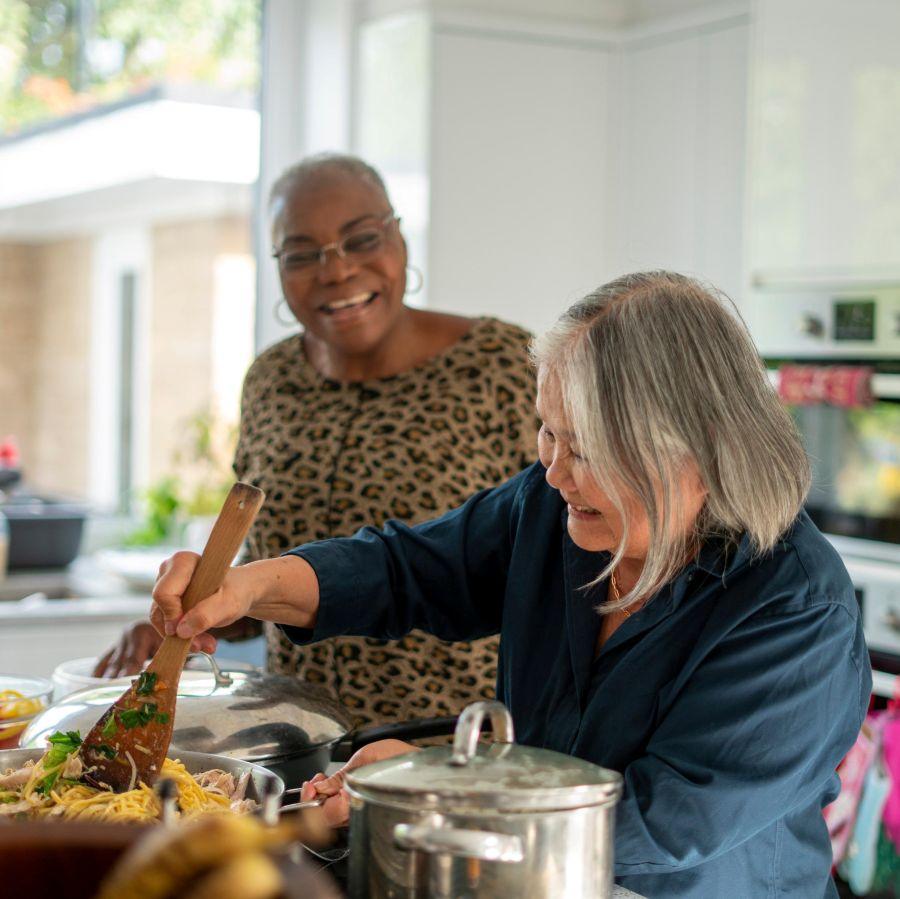
 

Aging and Caring Together

Hello everyone,

I hope you’ve had the chance to enjoy the beautiful colours of fall and that this message finds you well. As we move into the greyer days of November, I’d like to bring some light your way with good news for the English-speaking community.

A New Chapter: From Well 50+ to Aging in Community

When I first took over the Well 50+ program in early 2023, our team was eager to continue supporting older adults—especially as our programs grew rapidly after the pandemic. We had plenty of ideas, but one thing was clear from the start: the needs of those aged 50 to 100 are far too diverse to fit neatly into one single program.

We also noticed that participants between 50 and 65 were underrepresented, often because they’re still working and can’t attend daytime activities. For years, the idea of tailoring the program to people’s needs rather than their age had been floating around.

Now, as of November 2025, I’m thrilled to announce that Well 50+ is officially becoming the Aging in Community program. This evolution reflects our mission to help English-speaking community members stay healthy, independent, and connected—at home and in their neighbourhoods—for as long as possible.

In this new version, you’ll discover the services of our new Senior Care Navigator, France Gaudet, who offers personalized guidance and support early in the aging journey, before challenges become crises. You can reach out to her by email at fgaudet@jhpartners.net or by phone at 418-684-5333 ext. 11918 (Please note that there is an error in the postcards presenting the service and that this extension is the correct one) . As program coordinator, I will make sure to pursue our program’s regular activities—like Brain Power drop-in, Safe at Home workshops, and Wellness Cafés—that foster connection and healthy aging in the community.

Recognizing Caregivers

Of course, aging in community doesn’t happen in isolation. Health and social services—whether public or community-based—are essential, but they don’t tell the full story. In 2013, an estimated 85% of senior care in Québec was provided by informal caregivers. With today’s growing needs and strained health systems, that percentage is likely even higher.

But being a caregiver isn’t just about supporting an elderly parent. It means providing emotional or practical help to any loved one living with a loss of autonomy—regardless of age or relationship. And there’s no threshold for what “counts”: nearly half of Quebec caregivers give between one and five hours of support a week, yet together, their efforts keep our health system afloat.

As we mark National Caregivers’ Week (November 2–8), I encourage you to reach out to a caregiver you know—because we all know at least one. Their work can be invisible and isolating, and even the smallest gesture—a kind word, a home cooked meal, or an offer to listen—can make a real difference.

Wishing you all a happy November!

Anaïs

Anaïs Fortin-Maltais, Aging in Community & Caregivers Program Coordinator

Conversations with Hazel

When I met up with Hazel for the first time, I was already familiar with her determined figure walking through the lounge on her way outside for her morning constitutional. This sounds like a healthy and pleasant activity, but for Hazel, it is like a daily marathon as she struggles valiantly through the building with her walker, slow and frail but strong with purpose, a sure sign of resilience if I ever needed proof.

We sat down together as total strangers and, by the end of our discussions, we were firm friends. I felt honoured to have had the experience of befriending her and being allowed into her private life. This was not just conversations about memories, invaluable as these are; this was delving into the very core, cutting to the quick of her life. There was no small talk between us: we stuck to the notions of resilience, meaning and gratitude.

Having read Viktor Frankl’s famous book, “Man’s Search for Meaning” in the past year, I was very aware that for Hazel, there is a search for meaning every day which is part of her resilience and her impressive determination to move forward despite the challenges of her reduced mobility and dependence on others, especially coming from a person who has lived most of her life being the one depended on.

Faith has always been central to her sense of meaning, as well as helping her sustain and develop her resilience and her gratitude. It has been the central pivot of her life. When we first began to talk, faith was the first word that came up regarding resilience, but it referred to so much more in her life and not just the notion of church. It was refreshing and unusual to hear her say that she inherited her faith from her parents. Many of us follow in the footsteps of our parents with particular beliefs or tendencies, but I was very struck by the notion of inheriting faith.

Hazel’s life revolved mainly around her parents, with whom she always lived in Sillery. She was utterly committed to her relationship with them, enjoying fellowship with them, spending happy social evenings together playing word games and puzzles, watching favourite TV shows together, and going to St. Patrick’s Church on Sundays. They were her friends, and as they got older, she automatically switched to being their caregiver, taking them to medical appointments and looking after all their needs. This was a life she embraced; she did not long to have a different life or to go off to live somewhere else on her own; she consciously chose to stay with them in the house where she had grown up. She stayed in that house for 40 years. Caring for her parents gave her meaning and fulfillment.

There was a moment in her life where things might have moved forward differently when she became close to a protestant priest, but since he was divorced and Hazel felt strongly about Catholic conventions, she did not feel able to pursue the relationship or to consider marrying him. Decisive and resilient in holding on to her own beliefs, she did not regret her decision.

For 35 years, Hazel worked in administration for the Gouvernement du Québec, leading a team that computerized the system of expropriation of lands for the building of the highway systems in Québec. She worked with the analysts in the Transport department and had a great deal of responsibility both towards people and in helping to organize the growing transport infrastructures. She does not talk about it with pride even though I tried to persuade her that she could be proud of such a career. She enjoyed her work but it was not the most important thing in her life. Her values and beliefs always remained number one in importance and pride was not something that came into the equation.

Walking and reading have also been important and enjoyable activities in her life. She enjoyed books about life in the Southern States, including Taylor Caldwell’s novels, and would share and discuss these books with her mother. Her physical mobility, however, has progressively deteriorated and her eyesight has diminished so much that she can no longer read. When her parents died and she moved to the Manoir Archer, she would walk for at least two hours every day, sometimes stopping at the Laurier Shopping Centre to pray in the chapel there. I don’t know if this chapel still exists, but if it does, it is a well-hidden treasure that Hazel discovered. This was at a time when walking was already difficult for her, and she walked everywhere with her walker. The quiet and under-practised sense of humour was expressed when she mentioned that her favourite saint is Saint Jude, the saint of hopeless causes. Were we all so humble, the world might be a better place!

Now that Hazel has reduced vision, she can no longer enjoy the puzzles, newspapers and books that she so enjoyed, but she does not feel bitter about her disabilities, despite the amount of physical and emotional effort required each day to keep going. She claims nothing actually gives her joy; living each day is hard work, but she is grateful at the end of each day that she can still walk. Furthermore, she still finds moments of peace at the weekly mass, which is another kind of gratitude.

“We lose what we value most,” she says, reflecting on her physical challenges and those of past friends, but then she goes on to say, “Everything is a gift if we use it that way,” and we continue to have a wonderful discussion about life’s ironies. We don’t choose to suffer, but facing suffering instead of trying to avoid it has made Hazel who she is today. Prayer has helped her get through tough times and continues to give her courage. Treated as a gift, suffering gives birth to a powerful resilience.

One could say that Hazel has two parallel trinities: her Catholic Trinity and the Trinity of Resilience, Meaning and Gratitude. After we finished our last discussion, I was reminded of John Milton’s sonnet on his blindness, and I thought how appropriate that is for Hazel’s life now. And so I end with the famous quote, “They also serve who only stand and wait.” Hazel’s quiet patience and faith are also a valuable form of service.


Conversations with Hazel took place in August and September 2025.

Article written by Sarah Blair (volunteer)

Jean's Journey

Jean Saville was born in Québec City, the oldest of 4 girls and 2 boys. She has 2 surviving sisters living in Québec City and a brother in Montréal. A strong and lovely lady, Jean acquired her basic French language skills in grade school as a second language and also through the French-Canadian children in her local area. She states that she still manages to get by in life with these skills. During her English schooling, Jean was rather a lone wolf, keeping to herself, but a young girl who was very keen on reading. This proved to be frustrating for her as there was limited access to books written in English. So, she eagerly read all that she could get her hands on!

After school, Jean worked for a short time, but was uncomfortable being around a lot of people. It was then that she felt a strong calling and entered the convent at the Sisters of Charity in Halifax. This was a particularly difficult time for her. She was overcome with feelings of loneliness, of being unsociable and of not belonging. She sought prayer as a method of escape. During her time at the convent, someone told Jean: “Vocation and what you do in life is a matter of choice.” As in French culture, she knew that the first born was given to God and therefore knew this to be her vocation. Although it was extremely hard for Jean, she chose to be resilient, maintaining her place at the convent for more than 5 years. This was due largely to the help of many of the kind nuns there, as well as various doctors who spoke to Jean and tried to help her understand her problems. After a time, however, Jean decided that even though she had made this choice, it had become clear to her that the reality was beyond her realm of capability. She felt that remaining there was going against the grain. Now some might think that Jean would have given up. But as she said, “I’ll never give up” because she was (and still is!) a very stubborn woman.

She returned to her parents’ home and lived there for some time. Family is extremely precious to her. She felt meaning in her life, unselfishly giving her time and engaging in activities in the service of others. It was, unfortunately, after leaving the convent that Jean experienced several more challenges in her life. Doctors finally diagnosed her with schizophrenia. While this was devastating news, she at last had an answer for some of her earlier problems in life. Sometime later, Jean had a fall and developed eye problems as she refused to seek hospital care. The damaged retina caused her much pain and anguish. During this stressful time, she often experienced feelings of sorrow, but again, through thoughtful prayer and stubbornness, she persevered and continues to this day to find ways to continue her love of reading. In her 60’s, Jean began searching out and reading religious books.  She had a vast collection of them in her home which she prized above all else. She has asked for certain accommodations to help her maintain as normal a life as possible with her reading. Jean refuses to give up. “I’ve got a good heart; I can’t give up. That keeps me going.”

All throughout Jean’s journey, she acknowledges thankfulness to a host of people who have crossed her path. People, she says, from every walk of life have shared their sound advice with her. Additionally, simple acts of kindness such as having phone numbers of her family written in large print by her chair, phone numbers also of those who would provide her transportation outside of the residence, as well as other items and accommodations provided to her with little to no cost humble her and fill her with gratitude. She greatly appreciates the volunteers at Saint Brigid’s Home, stating that they are “priceless”. Also of note, she expressed her contentment at being able to attend BINGO, having her nails done, attending the birthday tea parties and listening to the pianist play. She is blessed to exist in such a vibrant place as Saint Brigid’s Home.

Jean Saville has expressed that she refuses to give up. This stubbornness has given her meaning and purpose. She states that God reminds us that he accepts into Heaven only those who are willing to fight, to persevere through hardship. Though she has endured many challenges in her life, she proves to be resilient and steadfast. She marches on and is eager to help others along the way. And she is forever grateful for all those who have walked this journey together with her.


Article written by Kathie Jerow (Volunteer)

The Gifts of Growing Older

Hello everyone, and welcome fall! I’ll be honest—I was looking for inspiration for this month’s blog. As you may already know, JH Partners’ mission is health promotion and prevention. After three and a half years of writing monthly blogs, I sometimes worry I might repeat myself. But some topics are worth revisiting, and thanks to a community member who reads this blog and shared an insightful conversation with me, I found the exact subject upon which to reflect this month.

The hidden upsides of aging

You’ve probably heard people associate aging with decline. Chances are, you may have thought so yourself. This narrative—that we lose more than we gain as we age—is so ingrained that we rarely question it. In this radio segment (in French) that I listened to recently, I was delighted to hear someone talk about what we gain as we grow older, reminding us that there is always something to look forward to. According to researcher Laura Carstensen, older adults are overall better at conflict resolution, emotion regulation and general knowledge. They are also more likely to cross-check details to give a more complete answer. Her research even shows that emotional well-being tends to improve from early adulthood into old age. Feel free to watch her TED talk on the subject.

Giving thanks for wisdom, wellness and community

With Thanksgiving just around the corner, this reflection brings me back to a reminder I often tell myself: aging is a privilege—especially when health is on our side. I feel deeply grateful to grow a little older each day, and to watch my loved ones do the same. Yes, life comes with its share of challenges and obstacles, but there are also strengths we develop along the way—like resilience.

Through the Life Experiences project, a group of volunteers has been reflecting with residents of Saint Brigid’s Home on how they have faced adversity, where they found meaning and how they showed resilience. To highlight World Mental Health Day, we’ll be publishing the articles they wrote about these inspiring stories on October 10. Be sure to keep an eye on the WE Mind page on our website to read those articles.

Anaïs Fortin-Maltais, Well 50+ & Caregivers Program Coordinator

Before signing off, I invite you to take a look at our upcoming events for older adults. This month, we’re thrilled to invite you to a joint event with QCRC’s Lifelong Learning program on October 8, 1:30 p.m. at the Jeffery Hale Pavilion. At the Wellness Café: Accessing Medical Services Online, we’ll dive into the various online health platforms—Rendez-vous Santé Québec, Clic Santé, Carnet Santé, etc.—and learn the main differences. On top of it, we’ll benefit from a hands-on workshop with Lifelong Learning to schedule appointments online. Don’t miss this opportunity to gain a clearer understanding!

Happy Thanksgiving, and have a lovely fall,

Anaïs

Fresh starts in September

I hope you made the most of summer! And if you’re still holding onto it, don’t worry – September usually brings us plenty of hot, sunny days to enjoy before we ease into fall. You may already know about my love for autumn and all it brings: back-to-school energy, cozy sweater weather and the warm colours in the trees.

Over the years, I’ve come to realize that September feels more like a fresh start than January. It’s the time I sit down to sort through my thoughts, wishes and goals for the year ahead. I often ask myself, “Where do I really want to put my time and energy?” September is also when I feel most rested, which makes it easier to honestly commit to projects and activities that matter to me, beyond my day-to-day responsibilities.

If you’d like to share, I’d love to hear about the soul-nourishing projects you’ll be focusing on this fall. As for me, I’ll be trying something new by taking a university class, welcoming a puppy into my life and—hopefully—getting back to my crochet projects.

Coming up in the community

If you’re still looking for something meaningful to pour your energy into this fall, we have plenty of opportunities for you. Join us to connect with others, challenge your brain, move your body and discover new skills. And while I have your attention, I’d like to properly introduce three new activities in our line-up and a new volunteering opportunity.

First, the Think Fit program will join our Thinking Tuesdays lineup, alternating with our Brain Power Drop-in, which remains a more structured option. Think of this new program as a gentle workout for your brain! Facilitated by a volunteer, it will help you to practice cognitive skills such as memory, attention and planning through dynamic group activities. It’s a drop-in activity, so no registration is required.

Second, Safe at Home is our newest knowledge-transfer workshop, designed for older adults and caregivers concerned about staying safe at home. This idea sprang from conversations with community members wanting practical guidance on safely transferring themselves or others, preventing falls and responding if one occurs. Led by a registered occupational therapist, the workshop is offered free of charge to small groups twice a year, with limited spots available.

Third, we’re excited to introduce 50+ Fitness classes starting September 23. The program includes low-impact cardiovascular activities like dance, along with strength and balance training. Our certified instructor will ensure that every exercise can be adapted to your individual needs and abilities. The cost is $60 for 12 weekly sessions. You can register here.

Help shape our new Grandpals initiative

Lastly, we’re excited to share that our Well 50+ and Family Matters programs are joining forces to create an innovative volunteer opportunity: the Grandpals Initiative. This project will pair older adults who wish to share their time, knowledge and support with parents in the community who could benefit from a grandparent figure. Becoming a “Grandpal” can bring joy, purpose and meaningful connections—especially after retirement. Calling all older adults interested in helping shape the Grandpals project! We’d love your input and maybe even your participation. Please take our short Grandpals Survey.

Whatever you choose, I hope these activities give you the chance to recharge, connect, and enjoy the months ahead. For more information, please take a look at our events calendar.

Something to put in your calendar

Anaïs Fortin-Maltais, Well 50+ & Caregivers Program Coordinator

Before signing off, I’d like to remind you about Fall Fest on Saturday, September 20, at Quebec High School. This annual event is a wonderful chance to learn about services available to the English-speaking community of the region and to connect with its members. I’ll be there to share information about our programs, and I’d be delighted to meet both new and familiar faces, so please be sure to come by and say hello!

Wishing you a smooth transition into fall,

Anaïs

A Life of Love, Resilience, and Gratitude

In early July, I received an email inviting me to write about the life experiences of a local senior. I accepted with enthusiasm and, a few weeks later, learned that I would be meeting Elizabeth Vatcher, a 99-year-old resident of Saint Brigid’s Home.

I wasn’t sure what to expect, only that Elizabeth had lived nearly a century and I would help share her story. Over three visits in August, I came to know a woman shaped by love, sacrifice, resilience, and gratitude.

Elizabeth welcomed me warmly. She told me she was named after her grandmother, and that her middle name, Mary, was passed down from her mother. She was born in 1926 in the paper-mill town of Kenogami (now part of Saguenay), the second of eight children.

The streets she grew up on, Cabot and Price, were gravel roads back then. She remembers playing marbles in the dirt with her friends. Since her family didn’t own a car, she walked everywhere. The neighbourhood was mostly English-speaking, and she attended Saint Andrew’s United Church and the local English Protestant school.

“I had to leave school at age ten,” she told me. “I never finished Grade 5. I had to stay home and help my mother look after my younger siblings. I had to make sure they had clean clothes and got their feet washed every night.”

There was no bathtub or shower in Elizabeth’s childhood home. The family used a galvanized metal basin for bathing—just large enough for the younger children to sit in, one at a time, with their legs crossed. For the older ones, it was a two-step process. “You’d sit in it with your legs hanging out, get your top washed first, then sit on a little wooden chair to wash the rest.”

Later, she fell in love with Wilfrid, a French-speaking Catholic who lived nearby and attended the local French Catholic school. Elizabeth was a Protestant, though, and in 1940s Québec, that difference mattered.

“I used to play with his sisters,” she recalled. “When we were all just kids having fun, religion wasn’t an issue. But when he and I wanted to get married, it became one. That’s the way it was in those days.”

Elizabeth chose to convert to Catholicism so she could marry Wilfrid. “I had to read from Le catéchisme and learn everything on my own,” she said. “I went to the priest’s office at the presbytery. He would question me on my readings, and I’d answer. It took several months.”

Her parents respected her decision. “They understood that I was in love,” she said. “Wilfrid was a gentleman. He was clean, respectful, hardly smoked, never drank, and he always helped people.”

They married on November 10, 1945 at the Couvent Sainte-Famille in Kenogami. Soon after, they moved to Montréal, where Wilfrid worked as a welder on naval ships. They rented a small apartment in the east end. “It had no refrigerator or icebox,” she recalled. “I missed everybody from Kenogami. I was homesick.”

They returned to Kenogami about two years later. Wilfrid resumed his job at Alcan, where he had worked previously, and remained there until his retirement. All seven of their children were born and raised in Kenogami-Jonquière. Elizabeth remembers how, after a string of five daughters, “the whole town was praying for me to have a boy.” She eventually had two sons. “People used to come up to me on the street and congratulate me.”

She spoke fondly of the simple pleasures of life back then: cross-country skiing with other young mothers after the children were asleep, sliding at the local ski hill, shopping at Gagnon Frères. Eventually, the family moved to nearby Arvida (now part of Saguenay) and settled into a one-story house that Wilfrid helped build.

“For twenty years, we never missed a payment on the house,” she told me, smiling. She described the day the final notice arrived in the mail: “When we finally paid it off, everyone in the family danced around in the kitchen and celebrated. That was one of the happiest days of my life.”

On my second visit, I showed Elizabeth some old video footage of Kenogami in the 1960s that I had found online. One scene sparked recognition: “That looks like my mother walking!” she said, watching a woman pass by a department store window. She talked about the churches, the corner stores, the Collège du Sacré-Cœur, and the ski centre. She remembered it all.

On my third visit, I brought her a book I had managed to track down: The History of the English Community at Kenogami, Quebec: With an Emphasis on the Period 1912–1952. As we flipped through its pages, her voice lit up with familiarity: “He used to live across the street from us… I went to school with her… That was my first-grade teacher, Miss Black.” We found a photograph of her eldest brother, Tommy, taken on his wedding day in 1945, another of her cousin John, captured in a graduating class photo from 1946. On the headstone listing for the Protestant Kenogami Cemetery, we found the names of her parents, James Vatcher and Mary Mansbridge, who passed away in 1957 and 1979.

When I asked Elizabeth about the people who have had the biggest impact on her life, she replied, “my children.”

“All of them went to English school, but they also spoke French,” she said. “I wanted them to do something and become something.” She smiled as she spoke of her daughter Hélène, who worked for Alcan and joined the company choir. “She was so proud of that.”

When I asked Elizabeth what she was proudest of, she answered: “That I raised a family and kept the house going, most of the time by myself. My husband worked a lot.”

She has lived long enough to see her family grow across five generations: 17 grandchildren, 23 great-grandchildren, and even 2 great-great-grandchildren.

But she has also known heartbreaking loss. In a three-year period, she lost two daughters and a son. Her husband, Wilfrid, passed away in 1965. Of her seven siblings, only two remain: Allan, now 82, and Hilda, 89. She showed me a photo of her late sister, Beatrice. “She was so close to our family and so good to my girls when they were growing up.”

I asked how she endured such grief. She explained how there would be three days of mourning at the funeral home, where friends and family gathered. “And then you go home. You have to live through your grief.”

Still, she remains grateful. “When you’ve had so many bad days and trials, you appreciate the nice ones more,” she said.

Even now, she finds joy in life’s smallest gestures: a dish of cherries her daughter Anne brought her recently, or the birthday card that arrives on time every year from her daughter Jane. “It doesn’t matter what day of the week it is, she always gets it to me on time.”

She told me it makes her happy when her children bring up memories from long ago. “Remember, Mom…?” they ask. And she does. “Those are the best moments,” she said.

As I wrapped up our final visit, I asked Elizabeth what she’s thankful for today.

“That I’m still alive,” she said.

After a pause, she added, “I know I’m not the best at this, but I try to remember as much as I can.”

Then she asked, “Do you think my story is worthwhile?”

“Of course it is,” I replied. “You’ve lived through nearly a century of change—so much life, so much history. It deserves to be shared.”

“Thank you for thinking of me,” she said.


Author’s Note

It was an honour to spend time with Elizabeth and hear her story firsthand. Over the course of just a few short visits, I was struck by her strength, humility, and ability to find joy in life’s simplest moments. I’m grateful for the opportunity to help share her voice. Her story reminds us that the meaning of our lives is found in our connections with other people, and that even in the face of grief and loss, gratitude can endure.

Elizabeth passed away at Saint Brigid’s Home on September 2nd, 2025.


Bibliography

Google. (n.d.). [Street View of 3714 Rue Cabot, Jonquière, QC]. Retrieved August 11, 2025

Radio Canada Info. (2015, February 25). ICI NOTRE HISTOIRE : Kénogami il y a un demi-siècle [Video]. YouTube. https://www.youtube.com/watch?v=7gd5ha3RdcI

McIntosh, D., & McIntosh, C. (2004). The History of the English Community at Kenogami, Quebec : With the emphasis on the period 1912-1952. Epic Press.


Article written by Elyssa MacKinnon (Volunteer)
Scroll to Top